
362+ Names of Teeth in Mouth 🦷: Complete Tooth Guide
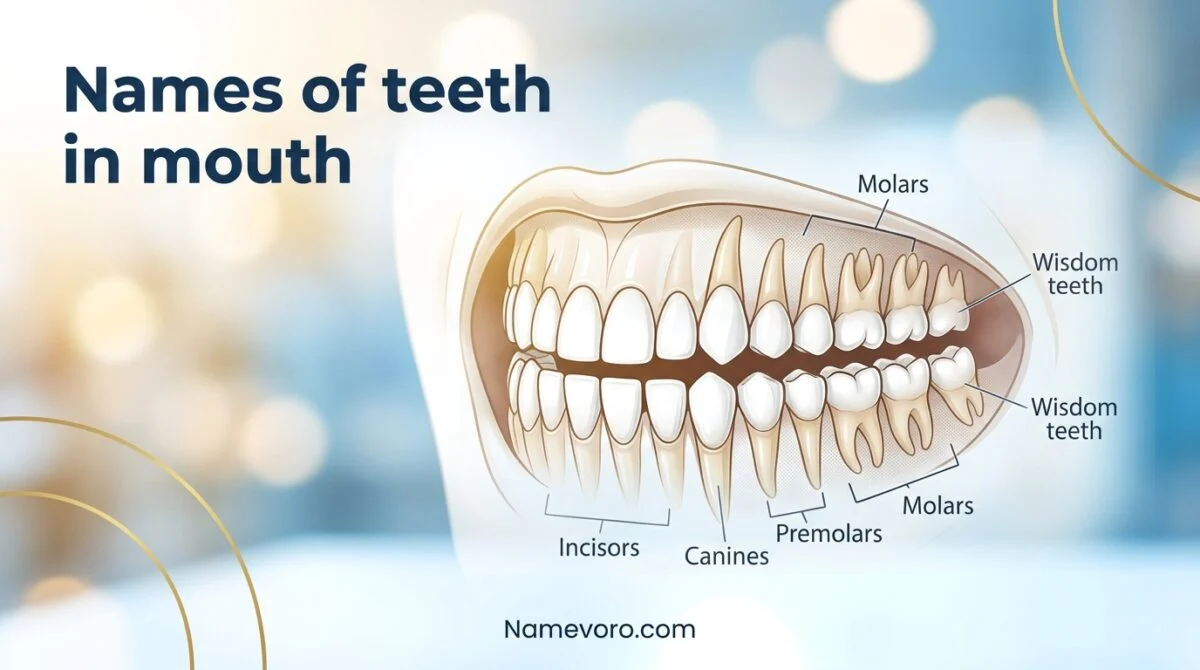
The names of teeth in the mouth help you understand your dental health, identify different teeth, and learn how each one helps you eat and speak. From the sharp front teeth that cut food to the strong back molars that grind it, every tooth has a specific purpose.
Adults typically have 32 permanent teeth, including wisdom teeth, while children usually have 20 primary teeth. Knowing the names and locations of these teeth can make dental appointments less confusing and help you understand common dental concerns.
Whether you are a student, a parent teaching a child about oral health, or simply curious about your smile, this guide explains each type of tooth in clear, simple language.
Quick Answer
The four main types of teeth in the human mouth are incisors, canines, premolars, and molars. Incisors cut food, canines tear it, premolars crush it, and molars grind it. Most adults have 32 permanent teeth, including four wisdom teeth.
Teeth Names at a Glance
| Type of Tooth | Number in Adults | Main Function |
|---|---|---|
| Incisors | 8 | Cutting food |
| Canines | 4 | Tearing food |
| Premolars | 8 | Crushing food |
| Molars | 12 | Grinding food |
Note: These counts include four wisdom teeth. Some adults have fewer teeth because wisdom teeth never develop or have been removed.
Names of the Four Main Types of Teeth
Incisors
Incisors are the eight teeth at the front of the mouth. Four are on the upper jaw and four are on the lower jaw.
| Tooth Name | Location and Function |
|---|---|
| Central incisors | The two front teeth on each jaw; cut food |
| Lateral incisors | Teeth beside the central incisors; help bite and cut |
- Incisors have relatively thin, sharp edges.
- They help you bite into foods such as apples and sandwiches.
- Their position makes them especially visible when you smile.
Canines
Canines are the four pointed teeth located beside the lateral incisors. They are also called cuspids or eye teeth.
| Tooth Name | Location and Function |
|---|---|
| Upper canines | One on each side of the upper front teeth |
| Lower canines | One on each side of the lower front teeth |
- Canines help tear food into smaller pieces.
- Their long roots provide support and stability.
- They help guide the teeth when the jaws move.
Premolars
Premolars, also called bicuspids, sit between the canines and molars. Adults usually have eight premolars, with four in each jaw.
| Tooth Name | Location and Function |
|---|---|
| First premolars | Located behind the canines; help crush food |
| Second premolars | Located behind the first premolars; assist with crushing and chewing |
- Premolars have broader surfaces than incisors and canines.
- Their raised points help break down food.
- Children do not have premolars in their primary teeth; these appear as permanent teeth.
Molars
Molars are the large teeth at the back of the mouth. They have broad chewing surfaces designed to grind food efficiently.
| Tooth Name | Location and Function |
|---|---|
| First molars | Permanent teeth that usually erupt around age six |
| Second molars | Usually erupt around ages 11–13 |
| Third molars | Also known as wisdom teeth; often erupt in late adolescence or early adulthood |
- Most adults have 12 molars if all wisdom teeth are present.
- First molars are important for everyday chewing.
- Wisdom teeth may become impacted or cause crowding, although not everyone develops problems with them.
Names of Teeth in Children
Children typically have 20 primary teeth, also called baby teeth or milk teeth. These teeth help children chew, speak clearly, and maintain space for permanent teeth.
| Tooth Type | Number in Children |
|---|---|
| Incisors | 8 |
| Canines | 4 |
| First molars | 4 |
| Second molars | 4 |
| Total | 20 |
- Baby teeth generally begin appearing around six months of age.
- Most children have a complete set of primary teeth by about age three.
- Permanent teeth gradually replace baby teeth, usually beginning around age six.
How Teeth Are Arranged in the Mouth
The mouth is divided into four sections: upper right, upper left, lower right, and lower left. Each section of a typical adult mouth contains eight teeth when wisdom teeth are present.
| Position in Each Section | Tooth Name |
|---|---|
| First and second | Central and lateral incisors |
| Third | Canine |
| Fourth and fifth | First and second premolars |
| Sixth and seventh | First and second molars |
| Eighth | Third molar or wisdom tooth |
This arrangement makes it easier to understand dental charts and identify the location of a particular tooth during an appointment.
Quick Guide to Choosing the Right Tooth Name
- Identify the location: Front teeth are incisors; pointed teeth beside them are canines.
- Look farther back: The teeth behind the canines are premolars, followed by molars.
- Consider the function: Cutting, tearing, crushing, and grinding correspond to the four main tooth types.
- Remember age differences: Children have primary teeth, while adults typically have permanent teeth.
FAQs
What are the four types of teeth?
The four main types are incisors, canines, premolars, and molars. Each type has a different shape and function, helping you cut, tear, crush, and grind food.
How many teeth does an adult have?
Most adults have 32 permanent teeth, including four wisdom teeth. Adults without wisdom teeth typically have 28 teeth.
How many teeth do children have?
Children usually have 20 primary teeth: eight incisors, four canines, and eight molars. These teeth gradually fall out as permanent teeth develop.
What are wisdom teeth called?
Wisdom teeth are the third molars, located at the very back of the mouth. They usually emerge in the late teens or early twenties, although some people never develop them.
Conclusion
Understanding the names of teeth in the mouth makes it easier to recognize their locations and functions. Incisors cut, canines tear, premolars crush, and molars grind food. Adults typically have 32 permanent teeth, while children have 20 primary teeth. Learning these differences can help you better understand dental care and communicate with your dentist. Which tooth type did you learn something new about today? Share this guide with family or friends who want to learn more about oral health.

I am Fabian Lee, the passionate creator behind Namevoro. Dedicated to simplifying name choices and historical insights, I craft clear, concise, and compelling content that empowers readers to discover meaningful names effortlessly, ensuring a trusted and engaging experience for every visitor.